

I.C Developments, Design & Build
Hands with a pen and a scale rule working over house drawings spread on a wooden table
A guide for homeowners

How to choose a builder in Surrey

Insurance, accreditation, quotes, payments, contracts and the warning signs. What to check before you let anybody start work on your home, written by a firm that expects to be checked.

CHAS Accredited SSIP Assessed Fully Insured Building since 1996
Why this matters

Most building work goes wrong long before the first brick is laid. It goes wrong at the point somebody decides who to trust.

Hiring a builder is one of the biggest financial decisions most people make, and it is usually made on less information than buying a second hand car. There is no register you have to join to call yourself a builder in this country, no exam and no licence. That is not a scare story, it is simply how the trade works, and it puts the job of checking firmly with you.

The checks are not complicated. Insurance, accreditation, company records, a proper written quote, a sensible payment structure and a contract. An evening of reading and a few emails will separate the firms running a real business from the ones that are not, and none of it will offend anybody worth hiring.

We are a design and build company in Reigate and we have been building since 1996, so we plainly have an interest in you choosing carefully. We have also been called in more than once to finish work somebody else walked away from, and the pattern is nearly always the same. The warning signs were there at the start, and they were quiet ones.

The checks

What to confirm before you sign.

Six things worth having in writing. Any established firm will have every one of them to hand and will not blink when you ask.

Ask for paper, not promises

Everything here can be confirmed by email in a day or two, and most of it is free to look up yourself. Do it before you agree a price, because once a deposit has been paid you have lost most of your leverage.

Send the requests in one short message. A firm that answers promptly and in full has told you a lot about how the job will run. A firm that keeps meaning to send it over has told you rather more.

  • Public liability insurance. Ask for the certificate itself. Five million pounds of cover is common for domestic work, two million the sensible floor. Check the name matches the quote and that it is in date.
  • CHAS and SSIP. CHAS is an independent health and safety assessment. SSIP is the umbrella body that recognises schemes like it against a common standard. Somebody outside the firm has checked its safety records, and does so again every year.
  • Company registration. If they trade as a limited company, look them up on Companies House. It is free. You can see the incorporation date, the directors, the registered address and whether accounts are filed on time.
  • VAT registration. A firm turning over more than the threshold has to be registered, and a VAT number can be checked on the government website. VAT belongs on the quote, not sprung on you at the end.
  • How long they have been trading. Years are not a guarantee of quality, but they are a filter. An established firm has a record you can look at and a local reputation it would rather not spoil.
  • Who will be on site. Employed team, long standing subcontractors, or whoever happens to be free that week? It shows up in the finish and in how quickly problems get put right.
Comparing prices

The cheapest quote is usually the incomplete one.

Three quotes for the same extension can come back thousands apart, and the natural assumption is that the lowest firm is the good value one. Far more often it is the firm that has left things out. Not dishonestly in every case. A builder who spends twenty minutes at the house and prices from memory may genuinely believe the figure. It is simply that nobody has yet costed the steel, the drain run, the scaffold, the skips or the making good.

The only way to compare is like for like. Give every firm the same drawings, the same written specification and the same list of what you expect them to supply. Then read the quotes side by side and mark where they differ, rather than skipping to the total at the bottom. Where one is far lower, find out why before you treat it as a saving. It is nearly always a lower specification, work hidden inside a provisional sum, VAT excluded, or whole trades left off for you to arrange yourself.

Ask each firm what they have assumed and what they have deliberately excluded. A builder who says the ground is unknown and has put a provisional sum against the foundations is being straight with you. One who has priced a fixed foundation figure without digging a trial hole is guessing, and the guess will eventually land on your bill. Watch the timing too. A quote for a loft conversion that arrives an hour after the visit has not been priced, it has been estimated in the van.

The document itself

What a written quote should contain.

A quote is a document you may need to lean on months later. It should read like one.

There is no legal template, so quotes vary enormously in quality. The test is simple. If you handed it to somebody who had never seen your house, could they tell what is being built, what it costs, who supplies what and when the money changes hands? If not, ask for it to be written again properly. That request alone will thin the field.

Money

Never pay a large sum up front.

Money should follow the work, not lead it. Here is a structure that protects both sides.

The commonest way homeowners lose money on building work is paying a big deposit for a job that never properly starts. If a builder wants a third of the contract value before anybody arrives, ask what that money is actually for. There are honest reasons for a modest payment at the outset, usually where materials with long lead times have to be ordered and paid for, such as windows, structural steel or a kitchen. Even then it should be tied to a named order you can see a copy of, not a round percentage of the whole job.

For everything else, pay in stages against work that is finished and that you have walked round and looked at. Pay by bank transfer so there is a record, keep every invoice, and never hand over cash for a discount. The discount is small and what you give up in return is everything.

1

Materials on order

A modest payment only where long lead items genuinely have to be bought in advance, tied to a specific order with a copy attached rather than a percentage plucked out of the air.

2

Stages you can see

Foundations complete, structure up and watertight, first fix done, second fix done. Each stage looked at by you before it is paid, and invoiced against what is finished, not what is promised.

3

Never ahead of the work

At any point, the money you have handed over should sit slightly behind the value of what has been built. If it drifts in front, stop and ask why before you pay anything else.

4

A retention at the end

A small percentage, agreed in advance, held back for a set period after handover and released once the snagging list is cleared. No reasonable builder objects to it.

Paperwork

Get it in writing.

A contract is not an insult to a builder. It is the thing that stops a disagreement becoming an argument.

Plenty of domestic building work in this country still runs on a handshake and a text message. It works out most of the time, and when it does not, the homeowner is the one with nothing to point at. A written contract costs nothing and takes an afternoon. Standard forms exist for domestic projects and are widely used for extensions, loft conversions and full refurbishments, and your solicitor can look one over if the job is a large one.

It does not need to be long or full of legal language. It needs to say who is doing what, for how much, by when, and what happens if any of that changes. Variations deserve particular attention, because almost every project has some. Agree that any change to the scope is priced and confirmed in writing before it is carried out, and you remove the single biggest source of arguments about the final bill.

Evidence

Go and look.

Photographs are edited. A live site and an old client are not.

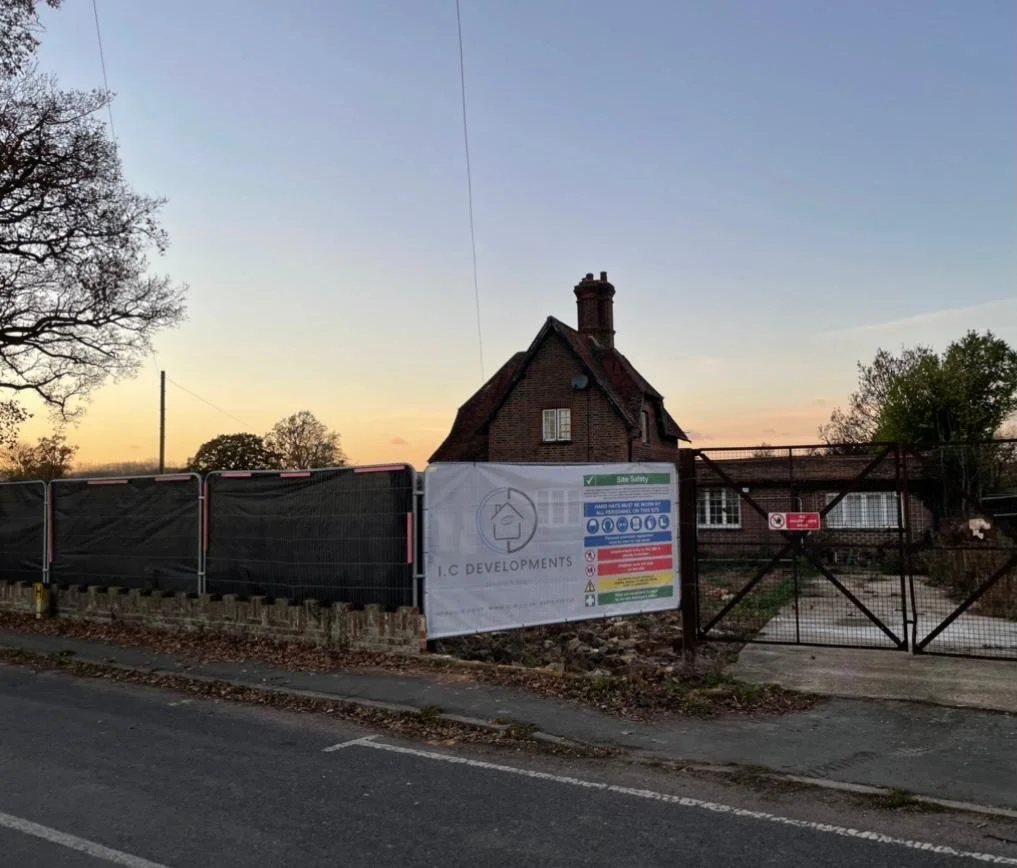
01A hoarded building site at dusk with an I.C Developments banner and a site safety notice board fixed to the fencing
A site that is running now

Ask to see one this week

The state of a builder's current site is the best single predictor of what your house will be like to live next to for three months. Ask to visit one, and go.

  • Tidy, or materials and waste spread across the garden
  • Secured, signed and safe for the people living there
  • The rest of the house protected from dust and traffic
  • Neighbours and the street treated with some thought
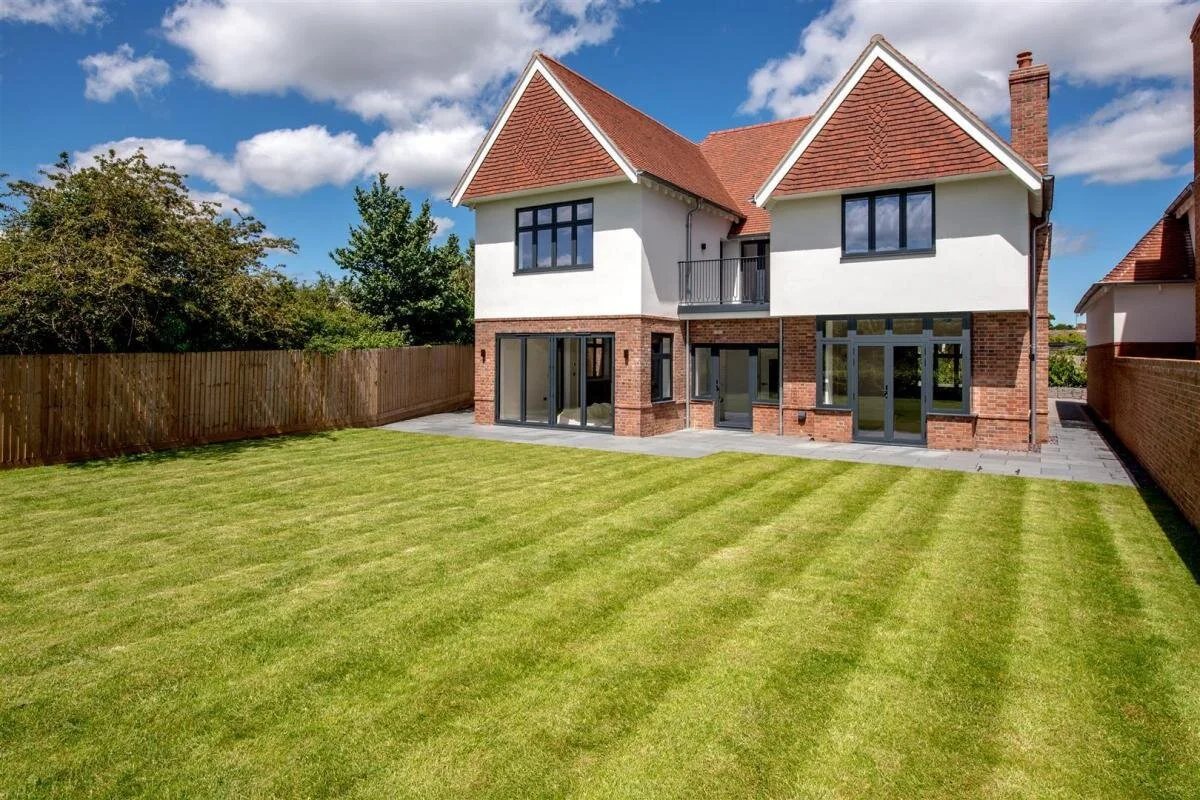
02A finished family home built by I.C Developments, with fresh brickwork, new windows and a landscaped front garden
Past clients

Ask about a job from two years ago

Anybody can show you work that finished last week. The interesting question is how a job looks after two winters, and whether the builder came back when they said they would.

  • Ask for two references, one recent and one a couple of years old
  • Speak on the phone rather than reading a written testimonial
  • Ask what went wrong on their job, because something always does
  • Ask whether the final bill matched the quote, and if not, why not
Warning signs

When to walk away.

Trust your instinct, but check it against this. Most of the bad stories start with one of the items on the left.

Red flags

Walk away
  • Cash only, or a discount for cash with no invoice and no paper trail
  • Pressure to decide today, or a price that only stands if you sign now
  • No written quote at all, just a figure said out loud or sent in a text
  • A large deposit wanted before any materials are ordered or any work starts
  • No fixed business address, only a mobile number and a magnetic van sign
  • Insurance documents that never arrive, or a certificate in a different name
  • Someone who called at the door because they noticed a problem with your roof
  • No interest in drawings, planning or building control, and a promise it will be fine

Green flags

Reassuring
  • The written quote arrives when they said it would arrive
  • Documents handed over without being chased, in the company's own name
  • They say no to something, or tell you honestly that an idea will not work
  • They are open about lead times and about what they do not yet know
  • Happy for you to visit a live site and to ring previous clients
  • Comfortable with a written contract and with staged payments
  • They talk about building control and work alongside your architect
The first meeting

Questions worth asking at the survey.

Print this, or keep it on your phone. The answers, and how readily they come, will tell you nearly everything.

About the firm

  • How long have you been building, and who owns the business?
  • Are the people on site employed by you or subcontracted?
  • Who is my main point of contact once work starts?
  • Can I see your public liability insurance certificate?
  • What accreditations do you hold, and who assessed you?
  • Have you built something like this in the last year?

About the job

  • What do you think is the hardest part of this job?
  • What would you do differently to what I have suggested?
  • Is this permitted development or does it need planning permission?
  • Who deals with building control and books the inspections?
  • How long will it take, and what could push that out?
  • How will you protect the rest of the house while you work?

About the money

  • What is included, and what have you deliberately left out?
  • Is VAT included in the figure you have given me?
  • What would make this price go up once you have started?
  • How do you want to be paid, and against what?
  • What happens if I change my mind about something halfway through?
  • What cover do I have if something fails after you finish?
Good to know

Common questions.

How much public liability insurance should a builder have?
Five million pounds of cover is common for domestic building work and two million is usually treated as the sensible floor. The figure matters less than the detail. The certificate should be current, the name on it should match the name on your quote, and the wording should cover the type of work you are asking for. If the firm has employees they must hold employers liability insurance by law as well. Ask for both by email so you have them on file.
What is the difference between CHAS and SSIP?
CHAS is a health and safety assessment scheme that reviews a contractor against a set standard. SSIP, which stands for Safety Schemes in Procurement, is the umbrella body that recognises schemes like CHAS against a common core, so an assessment by one is accepted by the others. In plain terms, an independent assessor has looked at the firm's policies, training records and accident history, and they have to pass again each year. It says nothing about the brickwork, but it does tell you the firm keeps proper records.
Is it normal to pay a deposit before building work starts?
A modest payment is normal where materials with long lead times have to be ordered and paid for, such as windows, structural steel or a kitchen. It should be tied to a named order you can see a copy of, not a round percentage of the whole job. What is not normal is a demand for a large share of the contract value before anyone sets foot on site. A builder who needs a third of your money up front is funding their business with your cash.
Do I need a written contract for a home extension?
Yes, and it protects you both. It does not need to be intimidating. It should name the parties, describe the works and the drawings they are based on, state the price and how VAT is handled, set out the payment stages, give a start date and a realistic duration, explain how variations are agreed, and say what happens about defects after handover. Plain English is fine. Standard domestic contracts exist and are widely used. A builder who wants nothing in writing is telling you something useful.
How many quotes should I get?
Three is the usual advice and it is sound, as long as all three are pricing exactly the same thing. Give every firm the same drawings, the same specification and the same list of what you expect them to supply, otherwise you are comparing different jobs. Read them side by side and mark where they differ rather than jumping to the total. If one is much lower, find out what has been left out before you treat it as a saving.
Should a builder be able to quote a price over the phone?
For a small, well defined job, perhaps. For an extension, a loft conversion or a refurbishment, no. Too much of the cost sits in things nobody can see from a description, such as the ground conditions, the state of the existing structure, access for materials and where the drains run. A figure given over the phone is a guess, and guesses have a habit of growing once work starts. Expect a site visit, questions about your drawings, and a written quote a week or two later.
One last thought

None of this is about distrusting builders.

Most of the trade is made up of skilled craftsmen who take real pride in the work and would be embarrassed to leave a job in a poor state. The checks in this guide simply move the decision off gut feeling and onto evidence, and they cost you an evening. The firms you want to hire will not mind them in the slightest, because they answer the same questions on every commercial job they price.

If you are gathering quotes for work in Surrey and you would like ours among them, we are based in Reigate and we cover the towns and villages around it. We have been building since 1996, we are CHAS accredited and SSIP assessed, we are fully insured, and we will hand over any document on this page without being asked twice. Tell us what you are planning on our contact page, or ring 07973 933125, and we will come and look at the house properly before we put a figure to anything.

Explore more

Where to go next.

Start your project

Let’s build something lasting.

from the soil in the ground to the keys in your hand